Today, artificial legs are often sophisticated devices that function with the use of a power source and sometimes sensors that make it possible to create a form of communication process between the device and the individual. Unlike the legs of centuries past, these newer prosthetic limbs often feature hydraulics that allow the leg to bend with the aid of an artificial joint, as well as balance on a prosthetic foot that mimics the actions of a human foot. Cosmetically, some of the replacement legs are covered with synthetic materials that have a appearance and feel that is similar to that of natural skin.
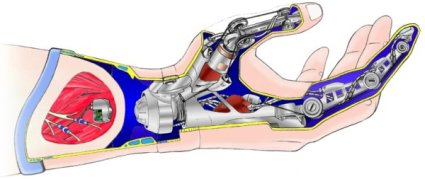
Prosthetic arms are also more sophisticated than in times past. Different models can be used to replace a forearm and hand, or an entire arm. Sensors mounted on the device at the point where the artificial arm fits onto the human body helps the wearer achieve more control of the limb, making it easier to operate the mechanism and simulate the natural movements of a human arm. The latest generation of artificial arms often are equipped with hands configured with digits that are capable of providing some ability to grip and perform functions in a manner similar to those of a human hand.